
The Fiscal Gimmick
Businesses currently are in a shock and are in dire need of fiscal support. Instead of providing them cash to operate, our govt seems to put the public's own money in the hands of the public
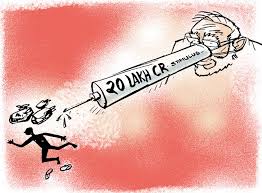
For starters, I was of the opinion that our government was not smart and efficient. However, post the announcement of a 20 lakh crore revival package I've partly modified my opinion. Our government is definitely smart. Efficiency still remains a question though. I do not urge people to become hardcore critics of the government, however it is not necessary to succumb by welcoming every move with a red carpet. The govt has been very cautious to avoid using the phrase "fiscal stimulus" in any of their public releases. It is only the newspapers that portray so.
Businesses currently are in a shock and are in dire need of fiscal support. Instead of providing them cash to operate, our govt seems to put the public's own money in the hands of the public. Following are some moves which are expected to boost liquidity.
1)Provident Fund:
For the next three months, the contributions to be made by employers and employees to the employees' PF a/c has been lowered from 12% of salary to 10% of salary. This move is aimed at boosting liquidity to the extent of Rs.6750 crore. It is crucial to note that this move virtually has no transfers to be made by the govt. A PF contribution can be viewed as a compulsory loan given to the govt by employees. Lowering the loan to be paid by the already cash stripped businesses struggling to pay wages and salaries, is of no help to the businessmen or their employees. This 6750 cr is a part of the 20 lakh cr revival package.
2) Lower TDS and TCS rates:
TDS and TCS are two popular tax collection mechanisms. These rates are lowered and this move is expected to infuse Rs.50000 cr into the economy. The tax rates haven't been lowered though. Which means payment of tax has been deferred but not avoided by this move. Once again this move doesn't even budge the govt's cash outflow. Still, it is claimed to be a part of the recovery package.
3) MSMEs:
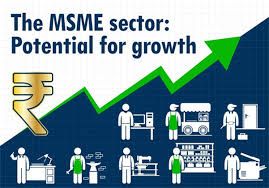
A hefty Rs. 3 lakh crore has been earmarked for supporting MSMEs. Though the sum sounds huge, it roughly works out to only Rs. 6 lakh per unit. Whether this amount would satisfy the needs of these units is a mystery. One really intriguing aspect of the announcement was that all dues to MSMEs by the govt would be released within 45 days. It clearly indicates that both laymen and the government are running out of cash.It's also pertinent to note that these loans would be made via banks and NBFCs while the government merely guarantees them. Hence, this move also doesn't kindle any immediate outflow from the government's coffers.
4) NBFCs:
Non banking Financial Companies have been battered to pulp because of Covid 19. Even prior to the pandemic their operations weren't smooth. To support these vulnerable companies which are crucial for the financial system as a whole, a window has been set up for them to borrow money. The earmarked amount for this purpose is Rs.45000 cr. The government merely guarantees that losses if any would be reimbursed (only the first 20% of the loss though). Though this move, is expected to stimulate lending and thereby economic activity, it again adds to the list of moves which doesn't affect the government's purse. (Banks and NBFCs seem too reluctant to lend and have parked a lot of funds with the RBI inspite of the reverse repo rate being lowered.)
Comparison:
Here are some measures taken by countries across the globe;
- In order to support 5 million self employed individuals whose cash flows have dried up, the British government has decided to provide them 80% of their annual profits or 2500 pounds whichever is lower.
- USA has supported their people by sending out 1200 dollars to millions of Americans and an additional 500 dollars per child. Also a range of measures have been announced to protect the interests of self employed individuals and freelancers.
These kind of measures will surely deepen the fiscal deficit. However such direct transfers are inevitable in situations like these. While countries across the globe have boldly decided to take a blow to safeguard their people, the Indian government seems to be too naive to do so. Though some good measures have been announced,they may not be substantial to trigger a speedy revival. Further, every move seems to be targeted at protecting the interests of the rich and the upper middle class but not the masses. For instance, the government(so far) has not pledged any amount for the benefit of freelancers.
The current situation is unprecedented where both demand and supply across the country have been hit severely. The demand issues are even more dangerous than the supply shocks. The only way to boost demand would be to put money in the hands of the masses. Though this would entail a serious widening of the fiscal deficit, it is in the best interests of the country.